KK7DFM
BawFaw Peak — Chehalis, WA
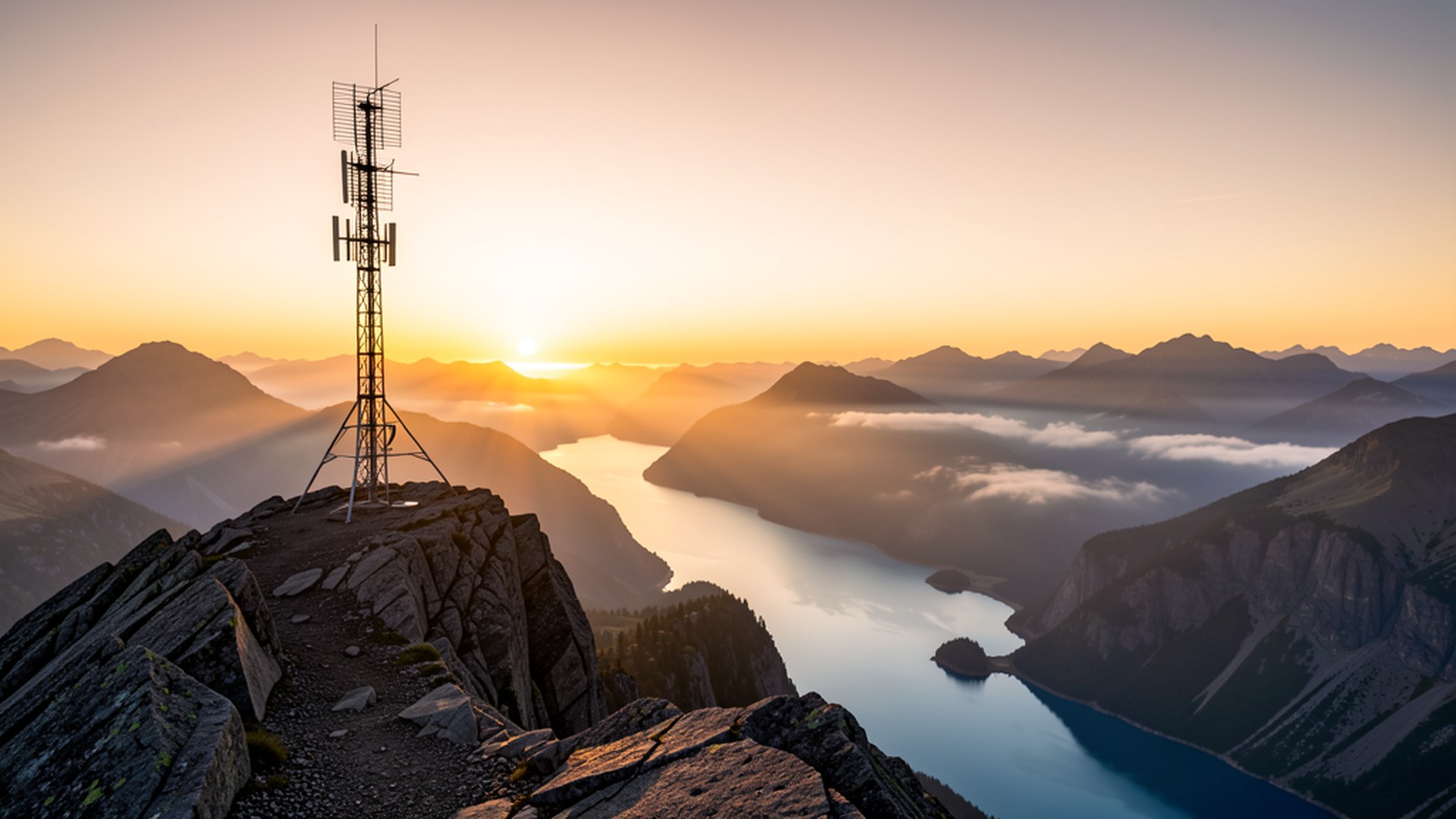
KK7DFM is a D-STAR + analog FM repeater located on BawFaw Peak (elevation ~2,800 ft) outside of Chehalis, Washington. It is an Icom G3 system, sponsored by the South Puget Sound D-Star Club, with coverage stretching from Tacoma to Vancouver — roughly a 100-mile radius.
Always Connected to XLX159
KK7DFM is permanently linked to the XLX159 multi-mode reflector. When you key up on this repeater, your traffic routes through XLX159 and can be heard on any other module connected to the reflector. This means you have immediate access to the wider D-STAR network without manually linking.
View the live dashboard at kk7dfm.dstargateway.org ↗ for real-time status, last heard, and gateway connection info.
Quick Reference
| Frequency | 444.450 MHz downlink / 449.450 MHz uplink |
| Offset | +5.000 MHz |
| PL Tone | None (carrier access) |
| Modes | FM (25 kHz wideband) + D-STAR |
| D-STAR Module | B (Gateway Repeater, DV) |
| Sponsor | South Puget Sound D-Star Club |
| Equipment | Icom G3 |
| Coordination | WWARA Record 5633 (expires 2027-05-07) |
| Grid | CN86jl |
| Coordinates | 46.48871, -123.21569 |
Location
BawFaw Peak is a mountain summit in the Willapa Hills, about 15 miles southwest of Chehalis, Lewis County. From I-5, head west on Highway 6 toward Pe Ell, then south on Forest Service roads to the summit. The site has line of sight over much of the I-5 corridor. The peak is also home to other public-service repeaters due to its excellent coverage footprint.
Programming Your Radio
To use KK7DFM for D-STAR, configure your radio as follows. The values below use KK7DFM (the actual callsign of the repeater hardware) for RPT1 and RPT2:
- MYCALL: Your callsign
- URCALL:
CQCQCQ - RPT1:
KK7DFM B(repeater callsign + module B) - RPT2:
KK7DFM G(gateway)
Callsign field width — 8 characters
D-STAR callsign fields are exactly 8 characters wide. In the examples above, KK7DFM B uses all 8 characters: 6 letters for the callsign, two spaces, then B in position 8. If a callsign is shorter — say N7QQU (5 letters) — you still need the module letter in position 8, with spaces filling positions 6 and 7: N7QQU A. Check your radio’s programming software — some handle this automatically, others do not.
URCALL: Local vs. Reflector traffic
Setting URCALL to CQCQCQ as shown above reaches only stations listening on the local repeater module — it does not link to a reflector. Your audio stays on this machine.
To talk beyond this repeater to the wider D-STAR network, you need to link the repeater to a reflector first. This is done by sending a link command in the URCALL field (check the repeater's linking commands), or by programming the reflector callsign directly. Once linked, set URCALL to CQCQCQ to call anyone on the linked reflector.
Key difference:
CQCQCQon a local module = local traffic onlyCQCQCQon a reflector-linked module = goes out to the D-STAR worldREFLECTOR C(or similar) in URCALL = routes directly to that reflector
For analog FM use, simply set the frequency to 444.450 MHz with a +5.000 MHz offset. No PL tone required.
Gateway & Resources
- Gateway: kk7dfm.dstargateway.org ↗
- D-StarUsers: dstarusers.org/viewrepeater.php?system=KK7DFM
- RepeaterBook: repeaterbook.com
- APRS.fi: aprs.fi KK7DFM-B
- jFindu: jfindu KK7DFM
FM vs. D-STAR on This Repeater
KK7DFM runs both analog FM and D-STAR simultaneously. FM users hear analog transmissions; D-STAR users hear the digital stream. The repeater does not cross-mode between FM and D-STAR, so both groups operate independently on the same frequency pair.
Range
From BawFaw Peak, the repeater covers the I-5 corridor from roughly Tacoma down to Vancouver, WA. Mobile coverage is excellent along the highway, with some shadowing in deep valleys. Handheld coverage with a good antenna is possible in many areas within 15–25 miles of the peak.
Sponsoring Club
The South Puget Sound D-Star Club maintains both KK7DFM and KK7DFL as a linked D-STAR system. Contact them for registration, questions, or to report issues.